
On January 13, 2026, a teenage patient in London quietly made medical history. Known publicly only as ‘Patient A,’ she received a drug designed for her and no one else. This marked a formal treatment approved under a brand-new regulatory system.
This moment marked the start of a repeatable process that could reshape how ultra-rare diseases are treated worldwide.
Ultra-rare diseases have always lived in the cracks of modern medicine. Drug development depends on large trials, shared symptoms, and predictable outcomes. When only one or two people have a condition, the system usually stops cold.
The treatment given to 'Patient A showed that the system can be rebuilt. Britain’s Medicines and Healthcare products Regulatory Agency created a pilot framework that approves the process behind custom drugs, not just the final product. Regulators reviewed the safety of the drug platform, the testing steps, and the manufacturing standards in advance.
This means future patients do not have to start from zero. Scientists can design new drugs using the same approved pathway, saving years of paperwork and delays. The science stays precise, but the rules stop getting in the way.
Lawrence Tallon, who leads the agency, called it the start of an exciting future for genetic medicine. That optimism rests on structure, not hope. Once a process is trusted, innovation can move faster without cutting corners.
How a Personal Tragedy Changed Everything?
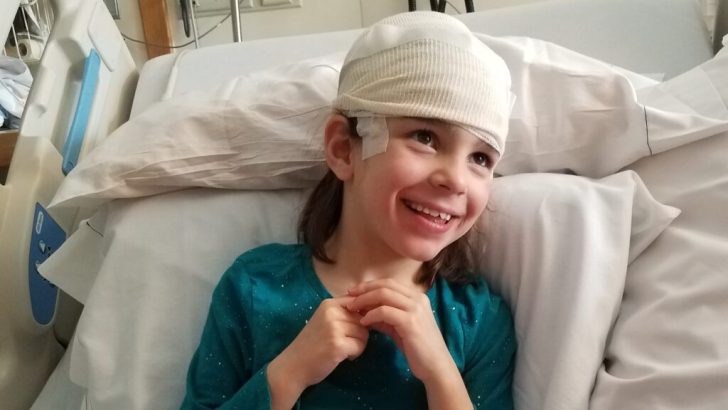
E News / This breakthrough did not appear overnight. Its roots go back to a young girl named Mila Makovec.
In 2018, Mila became the first person to receive a drug made specifically for her genetic mutation. Her family raised millions to make it happen.
The drug slowed her disease, but the effort nearly broke everyone involved. Mila died in 2021, and her mother, Julia Vitarello, decided that no family should face that fight alone again.
Vitarello shifted her focus from one child to the entire system. She spent years pushing regulators to think differently about rare diseases. Her message was simple and relentless. If science can build a custom drug, the law should not stop it from reaching patients.
In 2026, she helped launch EveryONE Medicines, a biotech company focused on scaling custom therapies. The goal was not mass production. The goal was reliable production for people who had been invisible to medicine. That advocacy shaped the MHRA pilot. What once took desperation and fundraising now has a clear legal path.
The Day the New Framework Went Live
On January 13, 2026, the theory became real. At Great Ormond Street Hospital in London, 'Patient A' received a custom antisense oligonucleotide therapy. The drug targeted her exact genetic mutation linked to Niemann-Pick disease type C.
The treatment happened under a formal clinical trial using the new master protocol. That distinction matters because it proves the system works in practice. The trial plans to include nine more children with different ultra-rare neurodegenerative diseases. Each child will receive a unique drug built through the same approved process.
Scientists are testing the system itself, not just individual medicines.
If the protocol holds up, future patients could receive treatment in months instead of years. That timeline could mean the difference between managing a disease and losing a child before help arrives.
Parallel Progress Inside the NHS

The News / In early 2026, the NHS approved the first licensed treatment for Activated PI3-kinase Delta Syndrome, also known as APDS.
APDS is a severe immune disorder with a short average lifespan. For years, patients relied on symptom control and hospital care. The approval of leniolisib gave families something new, a targeted therapy designed for the disease itself.
A 19-year-old patient named Mary Catchpole became the first person in Europe to receive the drug. Her family had helped identify the condition back in 2013, making the moment deeply personal and symbolic.
The approval came after the drug maker agreed to a confidential price reduction. The original cost was more than £350,000 per year.